Copper Bus Bars for Power Distribution: How to Choose the Right Design

Copper Bus Bars for Power Distribution: How to Choose the Right Design

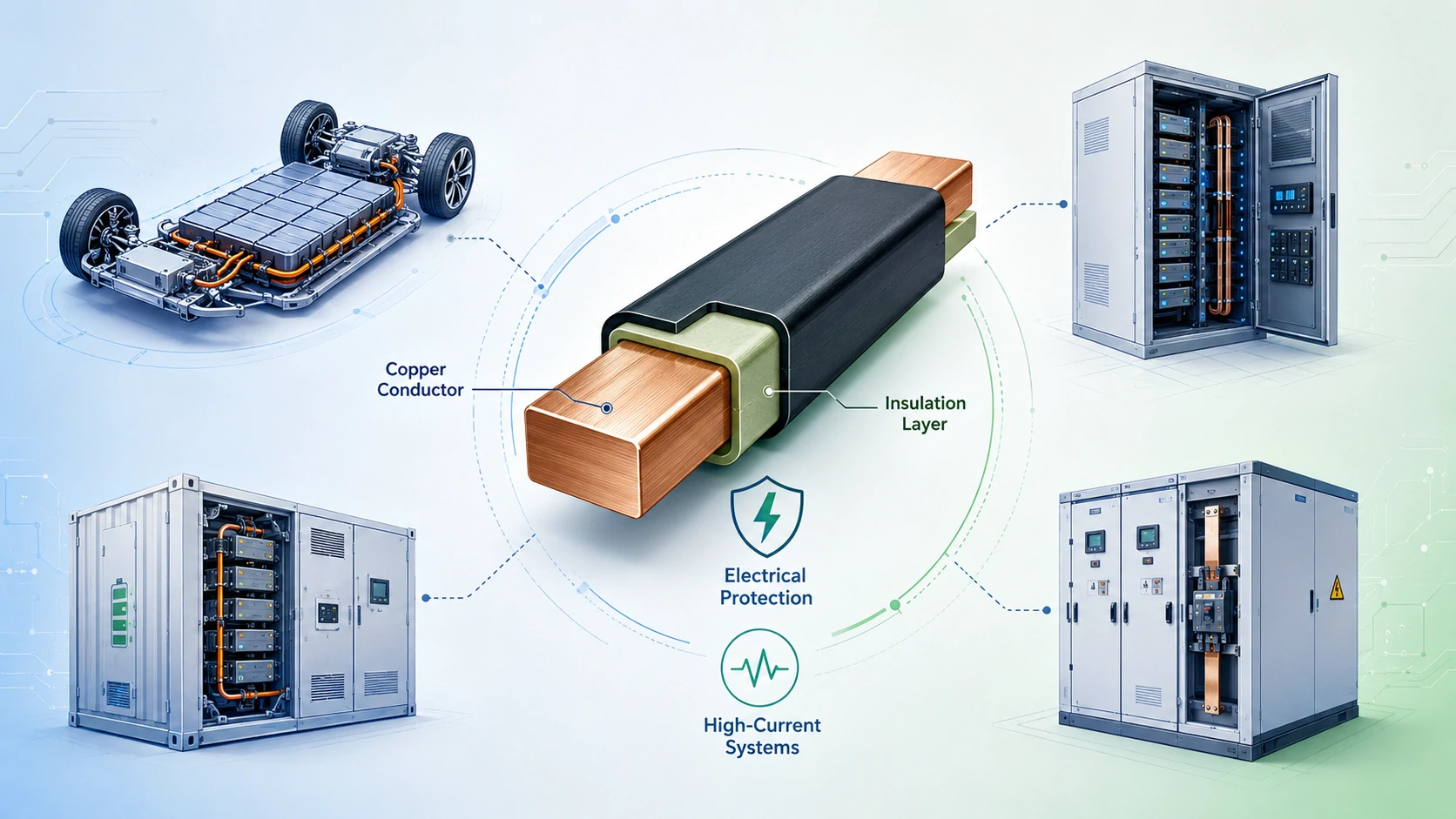
In modern power distribution equipment, a copper bus bar is much more than a piece of conductive metal. It is a current path, a thermal path, a mechanical support, an assembly reference point, and often a safety-critical component. When the design is correct, copper bus bars help switchgear, battery systems, inverters, control cabinets, charging equipment, … Read more

Copper Busbar Guide: Materials, Types, Manufacturing and Custom Options

Copper Busbar Guide: Materials, Types, Manufacturing and Custom Options

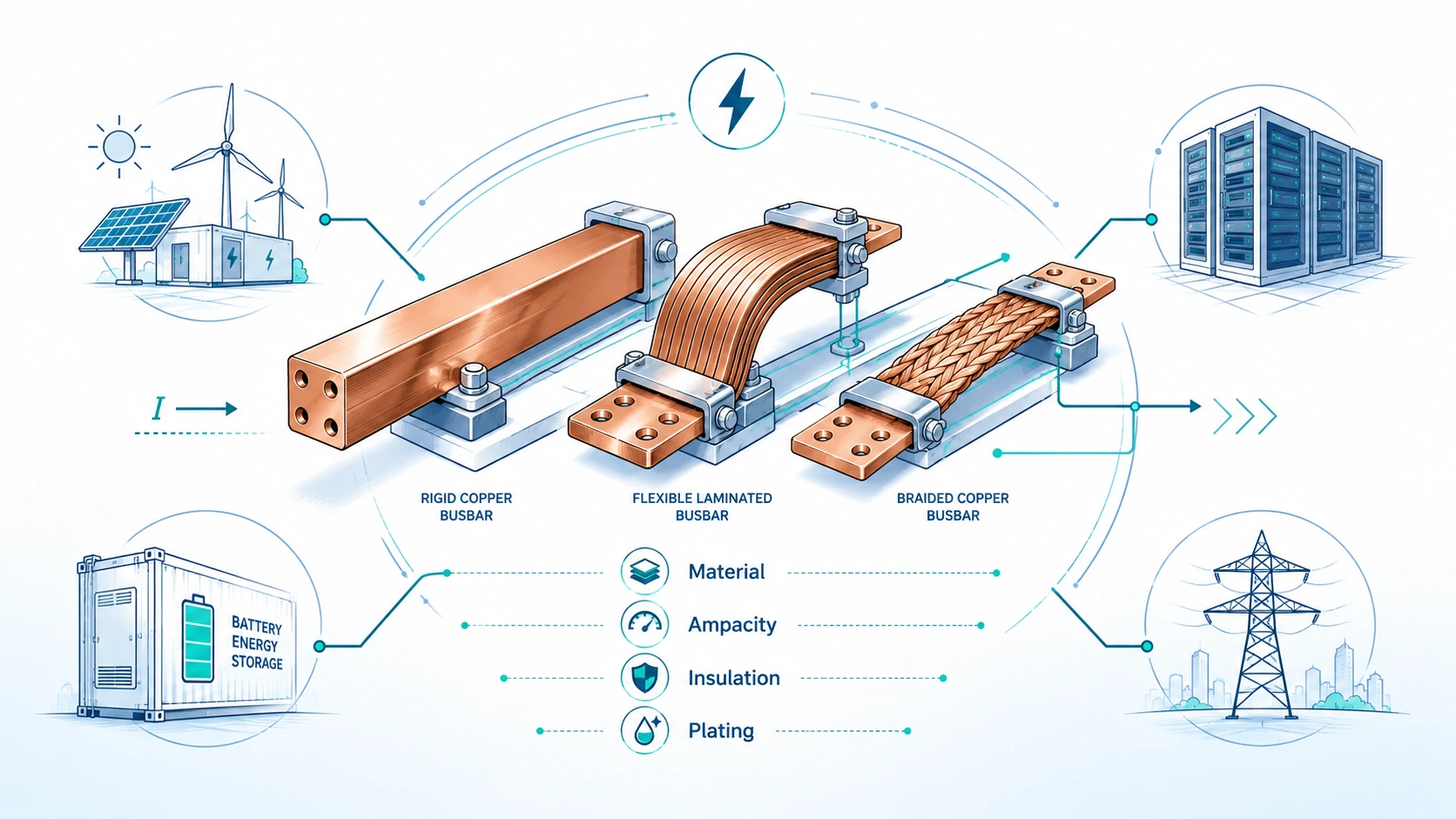
A copper busbar is one of the simplest-looking but most performance-critical parts inside a high-current electrical system. It may look like a flat copper strip with holes, bends or insulation, but in real equipment it controls how current moves, how heat spreads, how short-circuit forces are resisted, how much space the assembly needs, and how … Read more

What Is a Flexible Busbar and Why Is It Used in High-Current Electrical Systems?

What Is a Flexible Busbar and Why Is It Used in High-Current Electrical Systems?

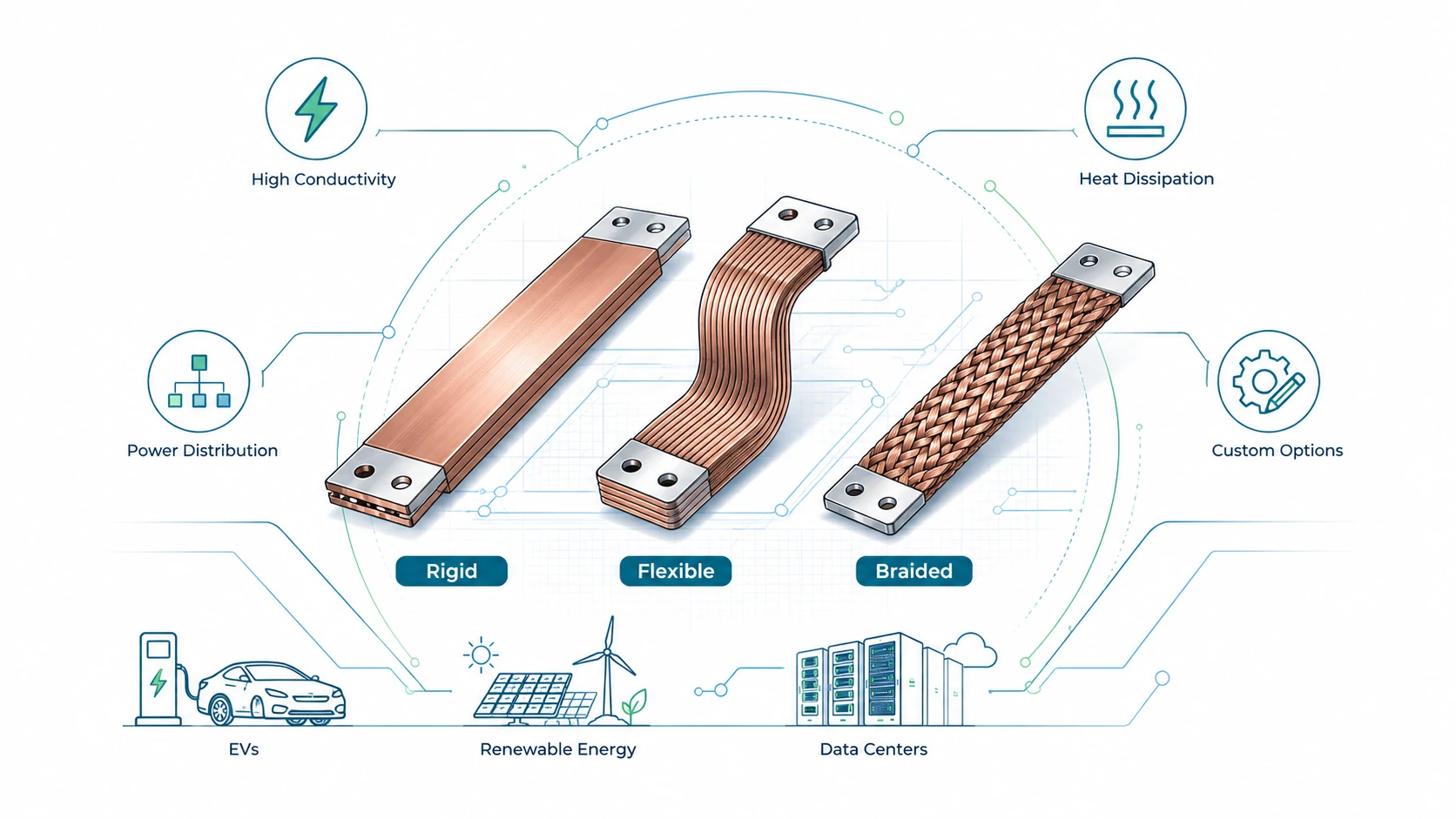
A flexible busbar is a specially engineered conductor used to carry high current between electrical components while allowing controlled bending, twisting, vibration absorption, thermal expansion, and compact routing. In simple terms, it is a copper power path that can move slightly with the equipment instead of forcing the equipment to adapt to a stiff metal … Read more

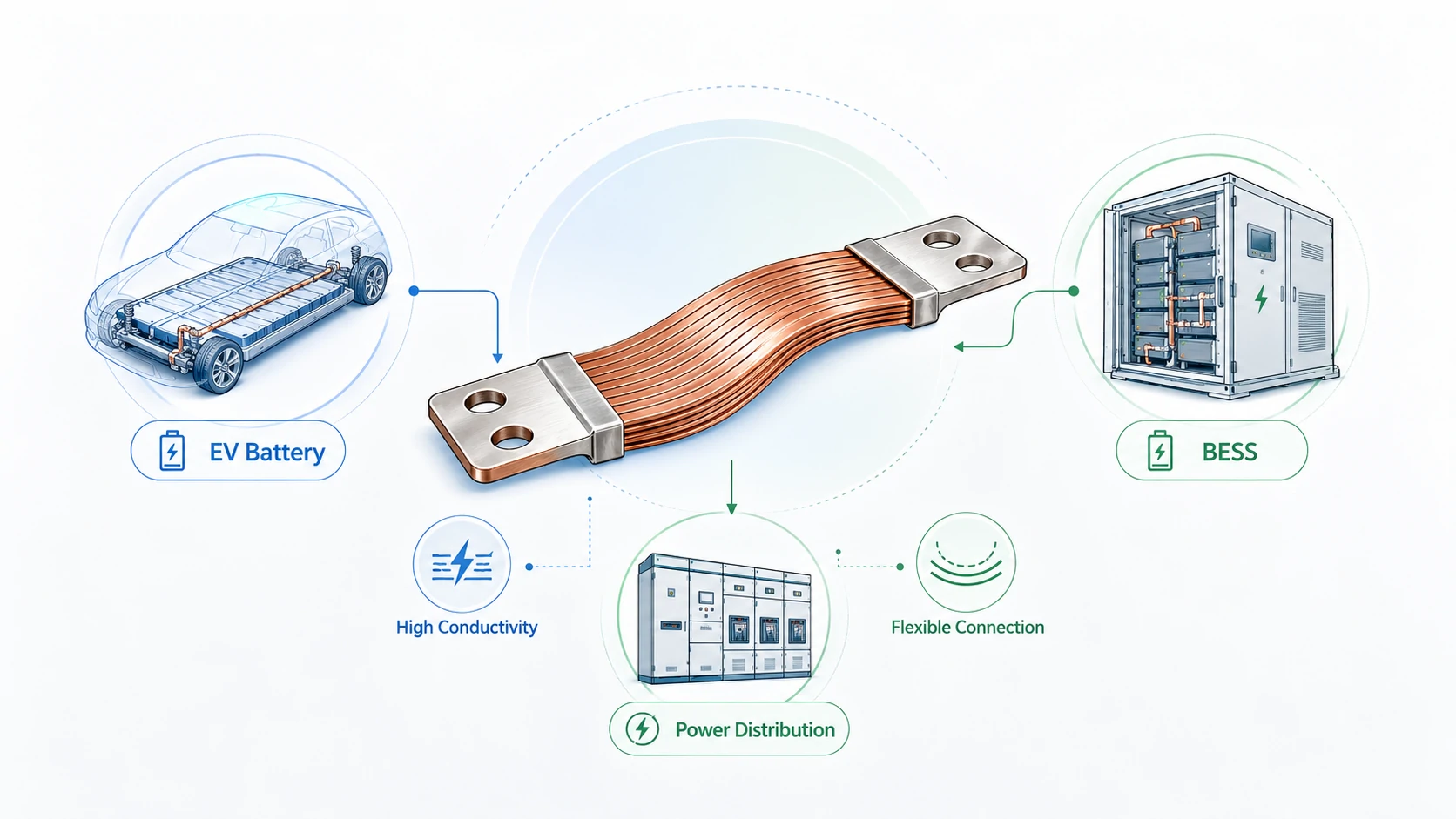
Flexible Copper Busbar: A Practical Guide for EV Batteries, BESS and Power Distribution

Flexible Copper Busbar: A Practical Guide for EV Batteries, BESS and Power Distribution

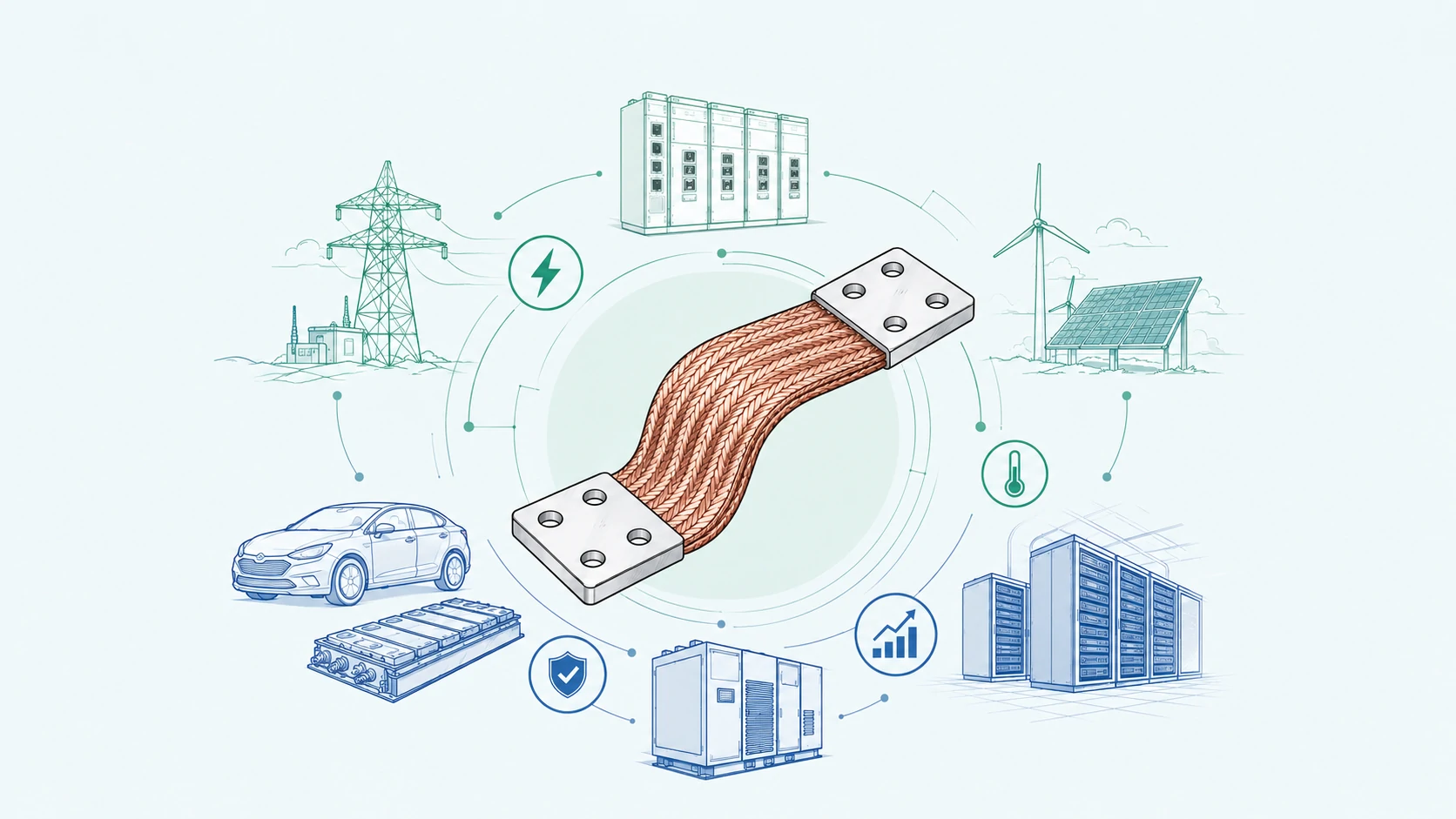
A flexible copper busbar is no longer a special-purpose conductor used only when cables are difficult to route. In electric vehicle battery packs, battery energy storage systems (BESS), renewable energy inverters, charging equipment, data center power cabinets and industrial power distribution units, flexible busbars have become a practical way to move high current through compact … Read more

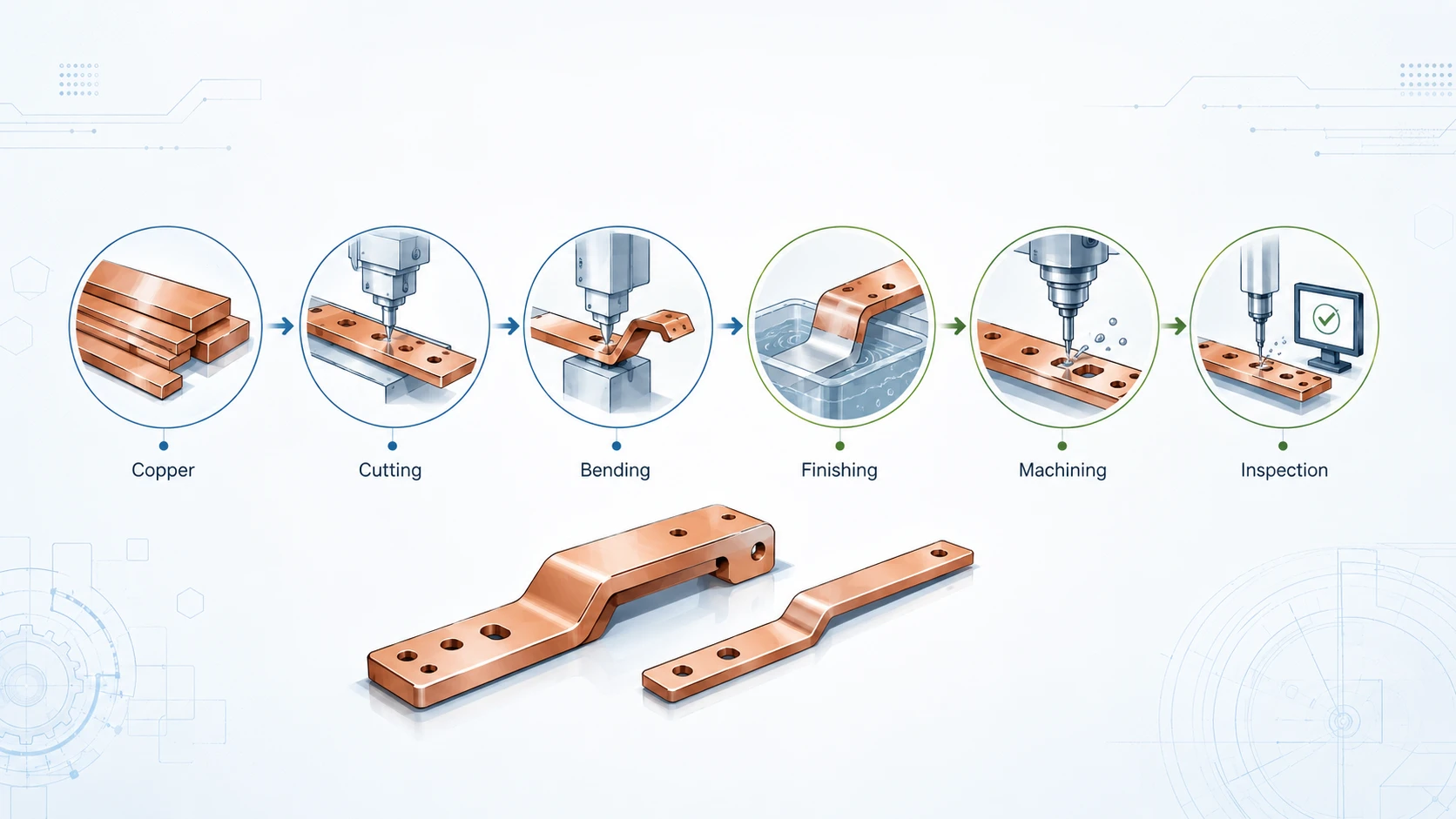
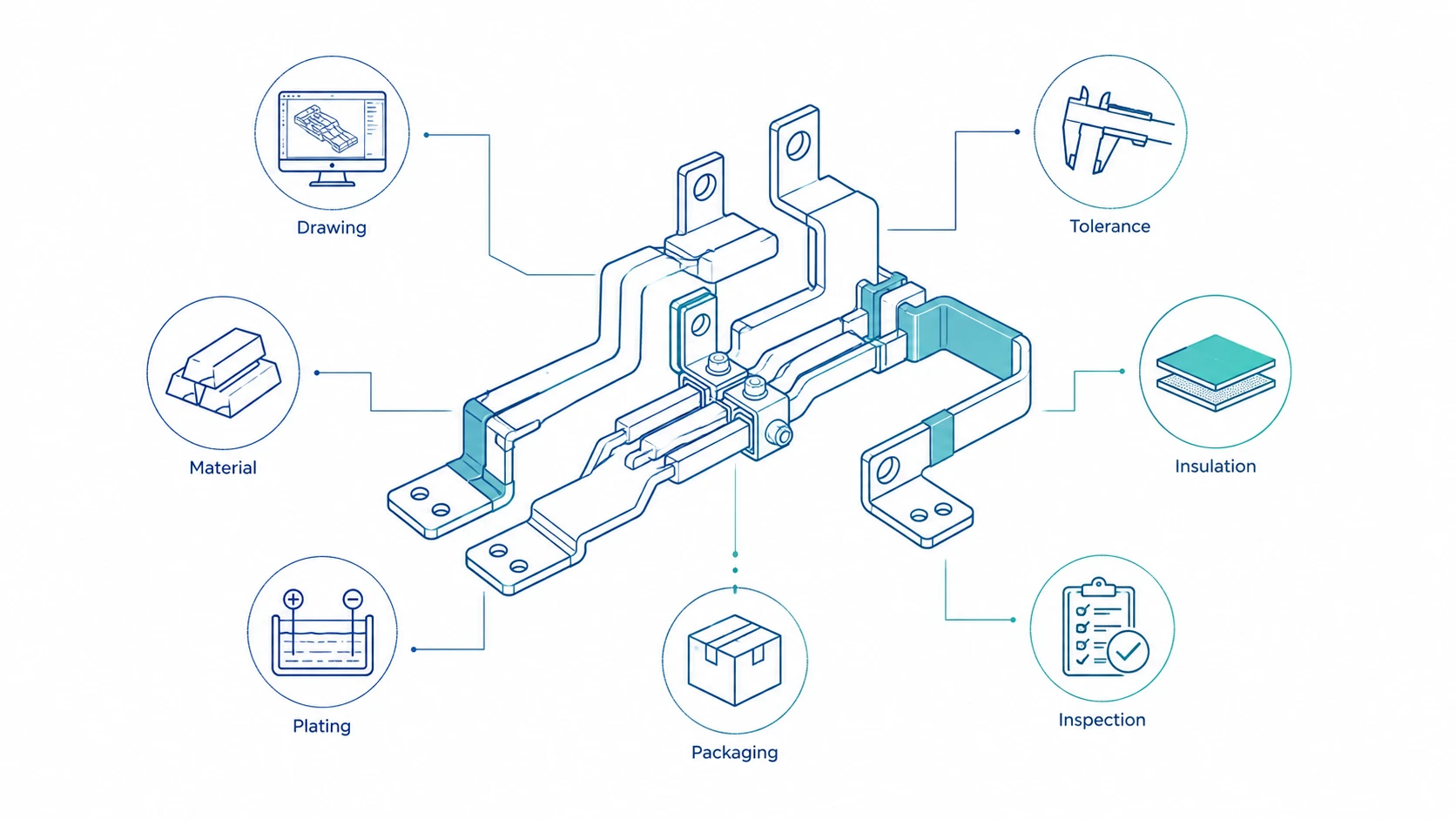
Rigid Busbars Manufacturing Process: From Copper Material to Precision Finishing

Rigid Busbars Manufacturing Process: From Copper Material to Precision Finishing

Rigid Busbars are not simply pieces of copper cut into convenient shapes. In modern electrical equipment, they are engineered current paths that must carry high current, control temperature rise, fit within tight mechanical envelopes, maintain stable contact resistance, and survive years of thermal cycling, vibration, installation stress, and maintenance handling. A small error in hole … Read more

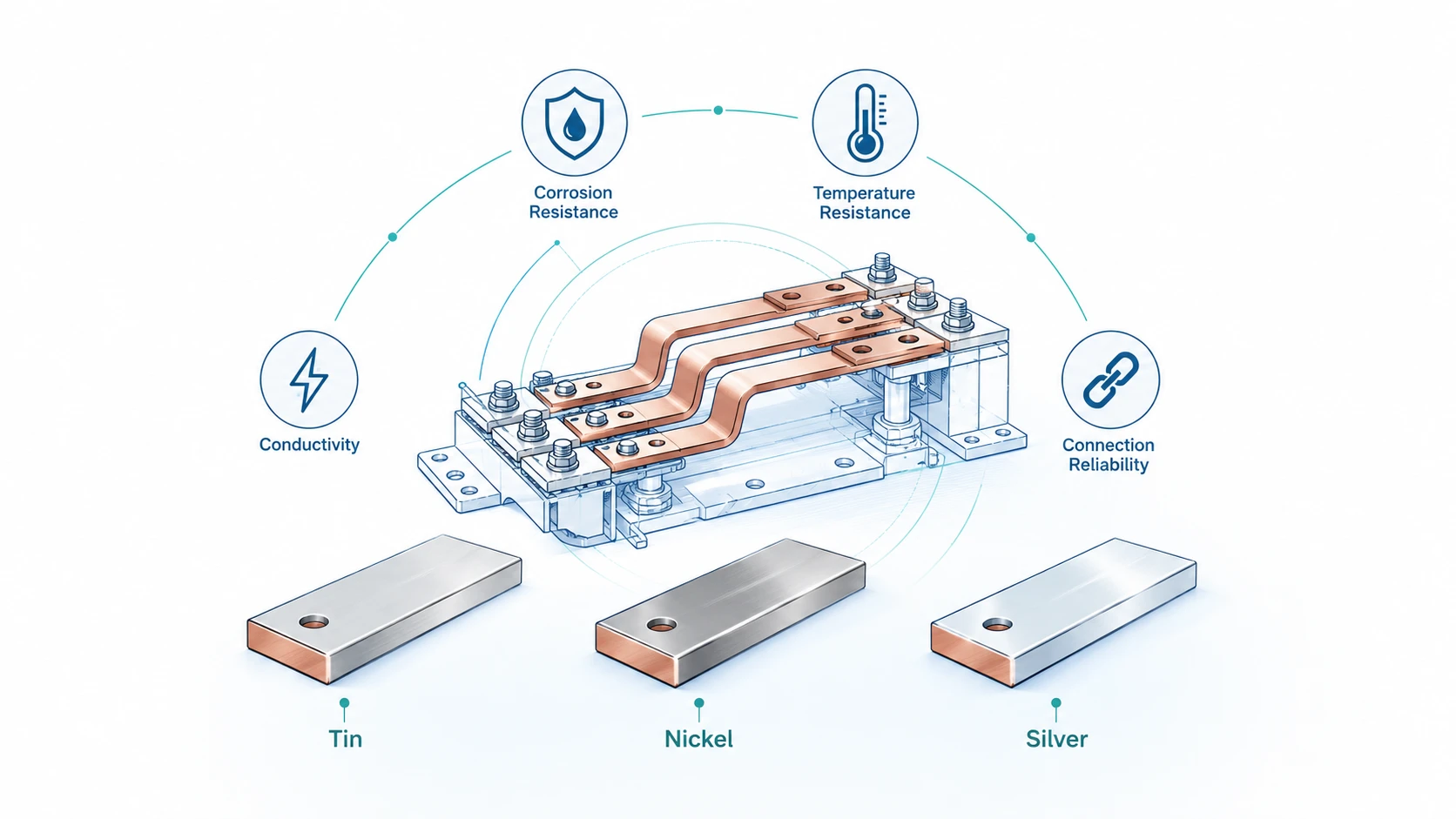
Tinned Copper Rigid Busbars: When to Use Tin, Nickel, or Silver Plating

Tinned Copper Rigid Busbars: When to Use Tin, Nickel, or Silver Plating

In high-current electrical systems, a copper busbar is often judged first by its size, copper grade, hole position, bend accuracy, insulation design, and current rating. Those details matter. Yet one small surface decision can determine whether the busbar remains stable after years of heat, humidity, vibration, maintenance cycles, and bolted contact pressure: the plating. For … Read more

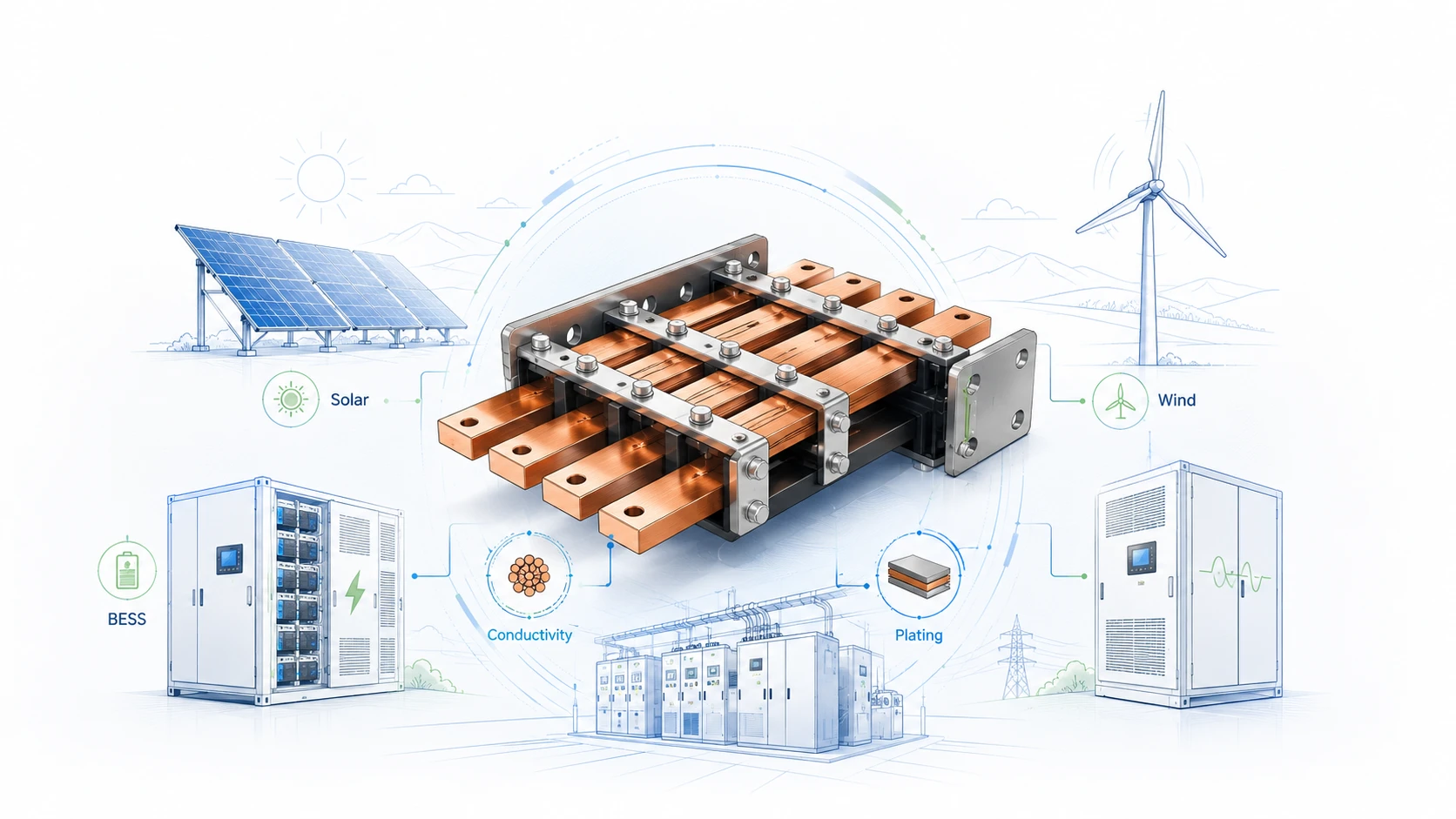
Rigid Busbars for Renewable Energy Systems: Key Considerations for EPCs and OEMs

Rigid Busbars for Renewable Energy Systems: Key Considerations for EPCs and OEMs

Renewable energy projects are no longer small experimental installations. Solar farms, wind power systems, hybrid plants, grid-connected battery energy storage systems, power conversion skids, EV charging hubs, and renewable-powered data infrastructure are becoming larger, denser, and more commercially demanding. For EPCs and OEMs, this shift changes the role of electrical interconnection hardware. A copper conductor … Read more

Custom Rigid Busbars: What Buyers Should Prepare Before Sending an RFQ

Custom Rigid Busbars: What Buyers Should Prepare Before Sending an RFQ

When buyers request a quotation for custom rigid busbars, the fastest response does not usually come from the shortest inquiry. It comes from the clearest inquiry. A message that says “please quote copper busbar, 200 A, urgent” may look simple, but it leaves the supplier guessing about material grade, copper thickness, hole tolerance, bend direction, … Read more

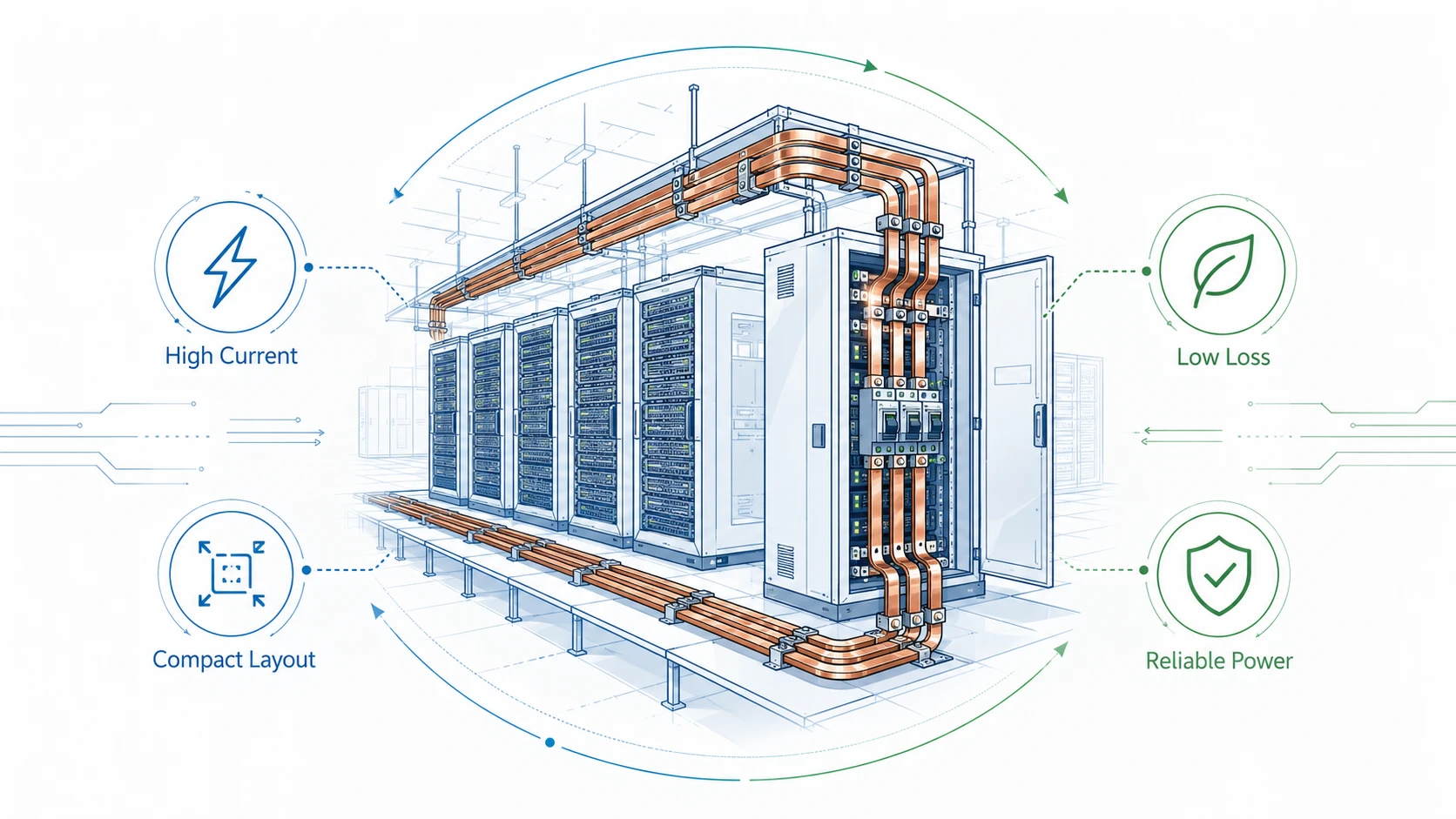
Rigid Busbars in Data Centers: Reliable Power Distribution for High-Density Electrical Systems

Rigid Busbars in Data Centers: Reliable Power Distribution for High-Density Electrical Systems

Data centers are often described through software words: cloud, AI, inference, storage, networking, latency, and uptime. But behind every digital workload is a physical electrical system that must deliver high current safely, efficiently, and repeatedly. As racks become denser and power paths become shorter, hotter, and more crowded, the electrical conductor is no longer a … Read more

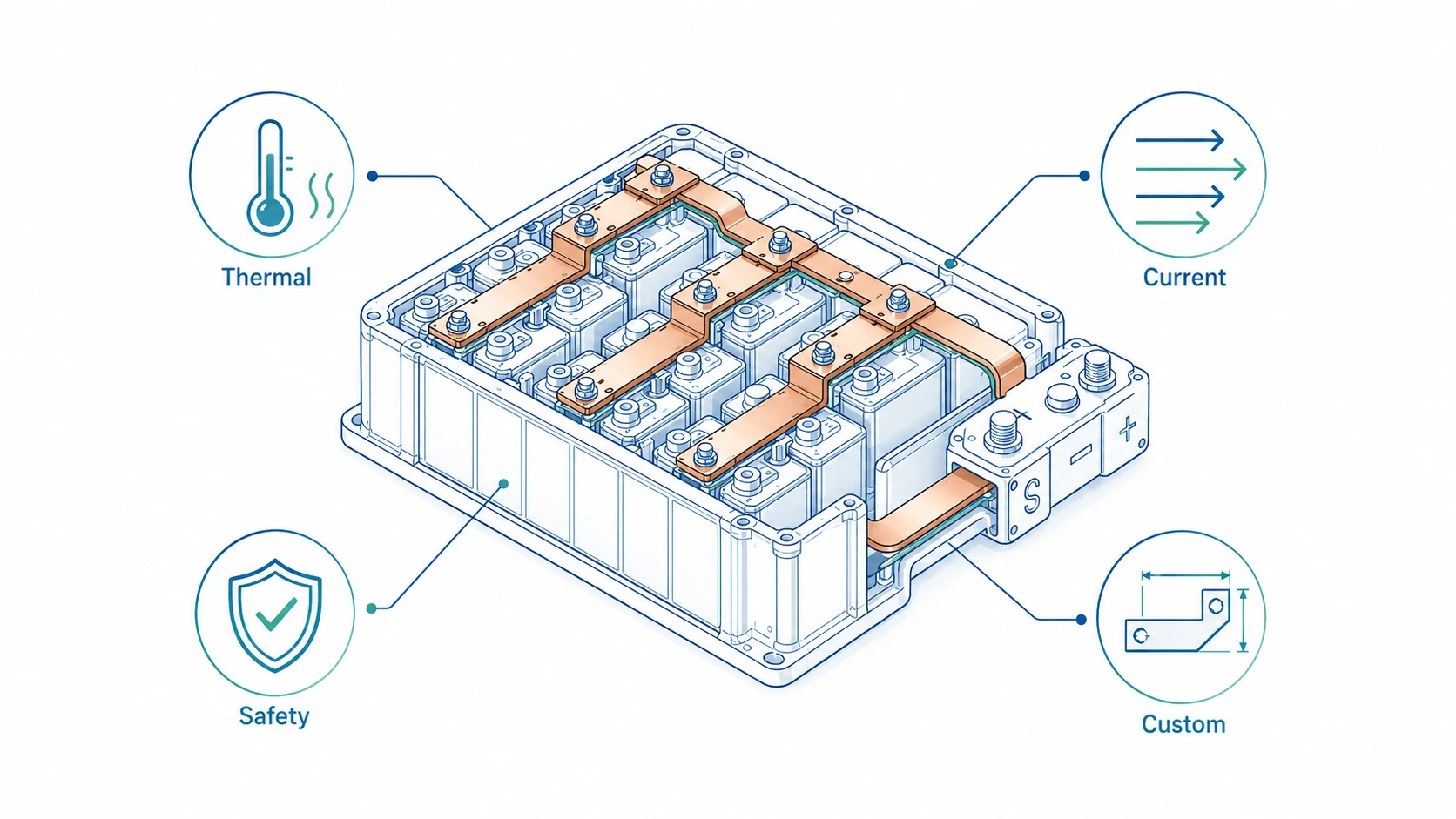
Rigid Busbars for Battery Packs: Design Requirements, Safety Standards, and Customization Tips

Rigid Busbars for Battery Packs: Design Requirements, Safety Standards, and Customization Tips

Battery packs are becoming more compact, more powerful, and more demanding. Whether the application is an electric vehicle, a stationary energy storage system, a data center backup system, a marine battery pack, an industrial robot, a forklift, or a high-voltage test platform, the battery pack must move large amounts of current safely and repeatedly. Cells … Read more

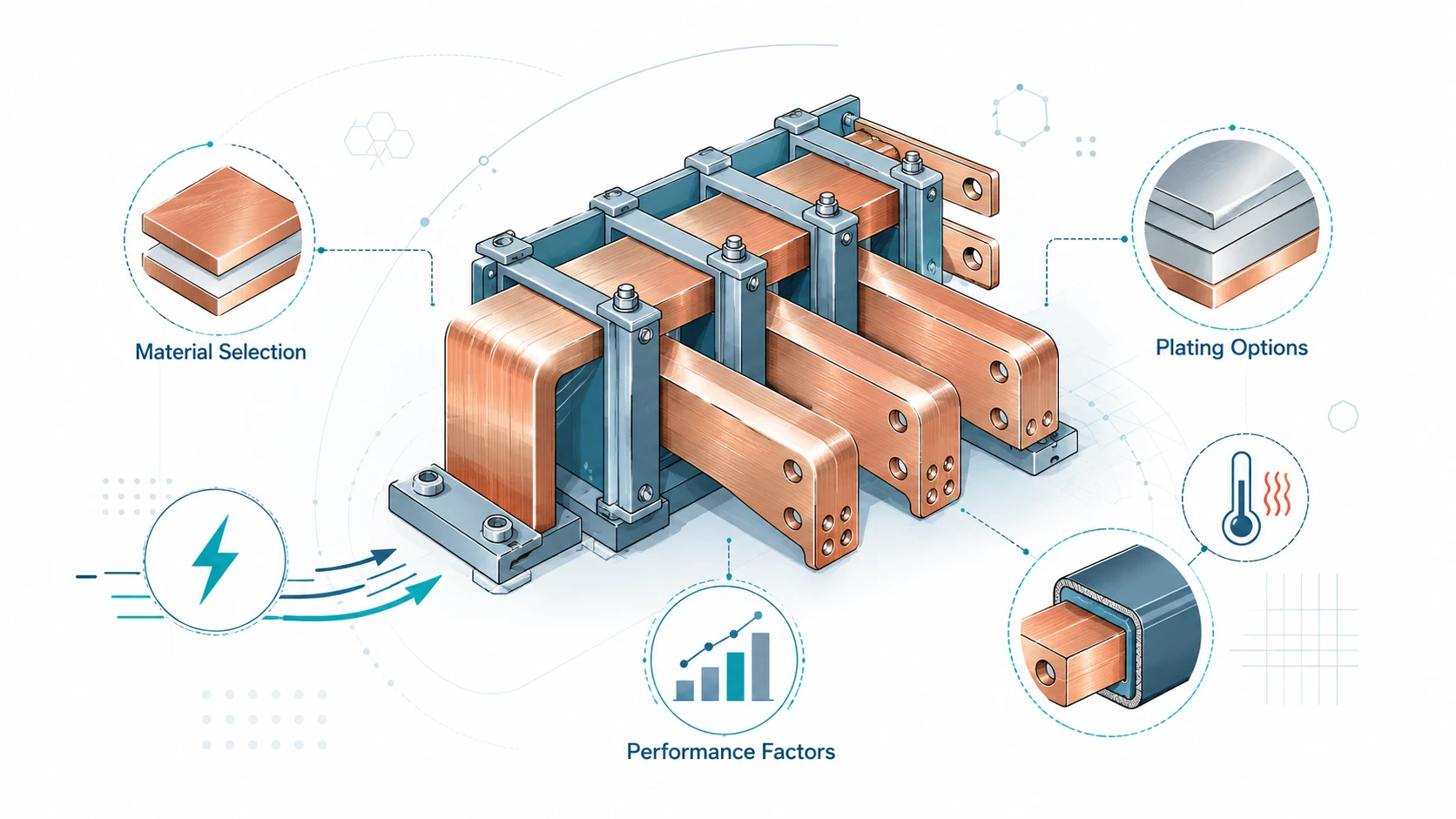
Copper Rigid Busbars: Material Selection, Plating Options, and Performance Factors

Copper Rigid Busbars: Material Selection, Plating Options, and Performance Factors

High-current systems are becoming smaller, denser, and more sensitive to heat. Electric vehicles, battery energy storage systems, data centers, industrial switchgear, UPS cabinets, charging infrastructure, and renewable energy converters all need power paths that are compact, repeatable, electrically efficient, and safe to assemble. This is where Rigid Busbars remain one of the most practical conductor … Read more